Aspen Art Museum
Fully responsive website redesign
Role
Web Designer
Industry
Art
Duration
3 Months
Project Brief:
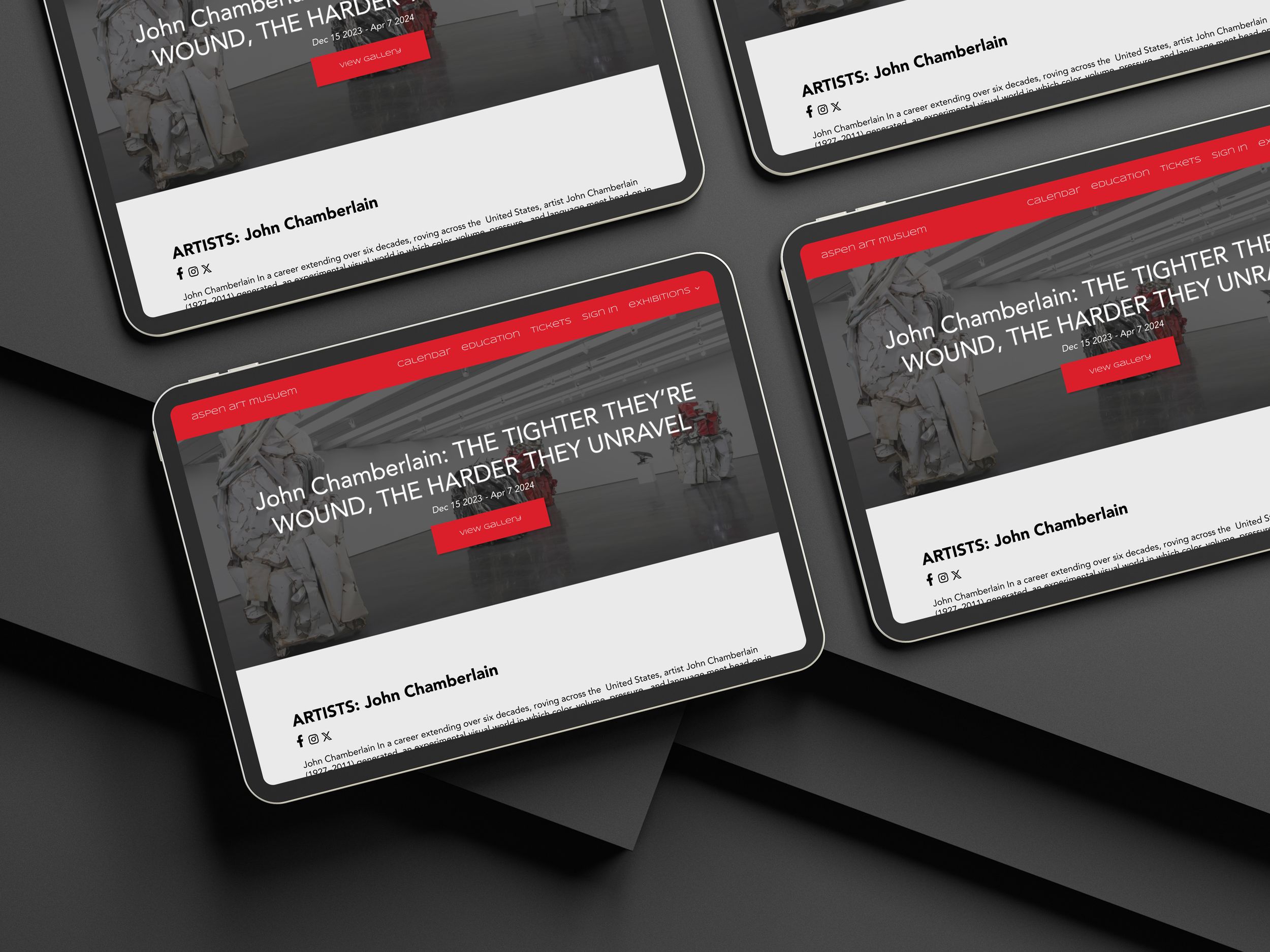
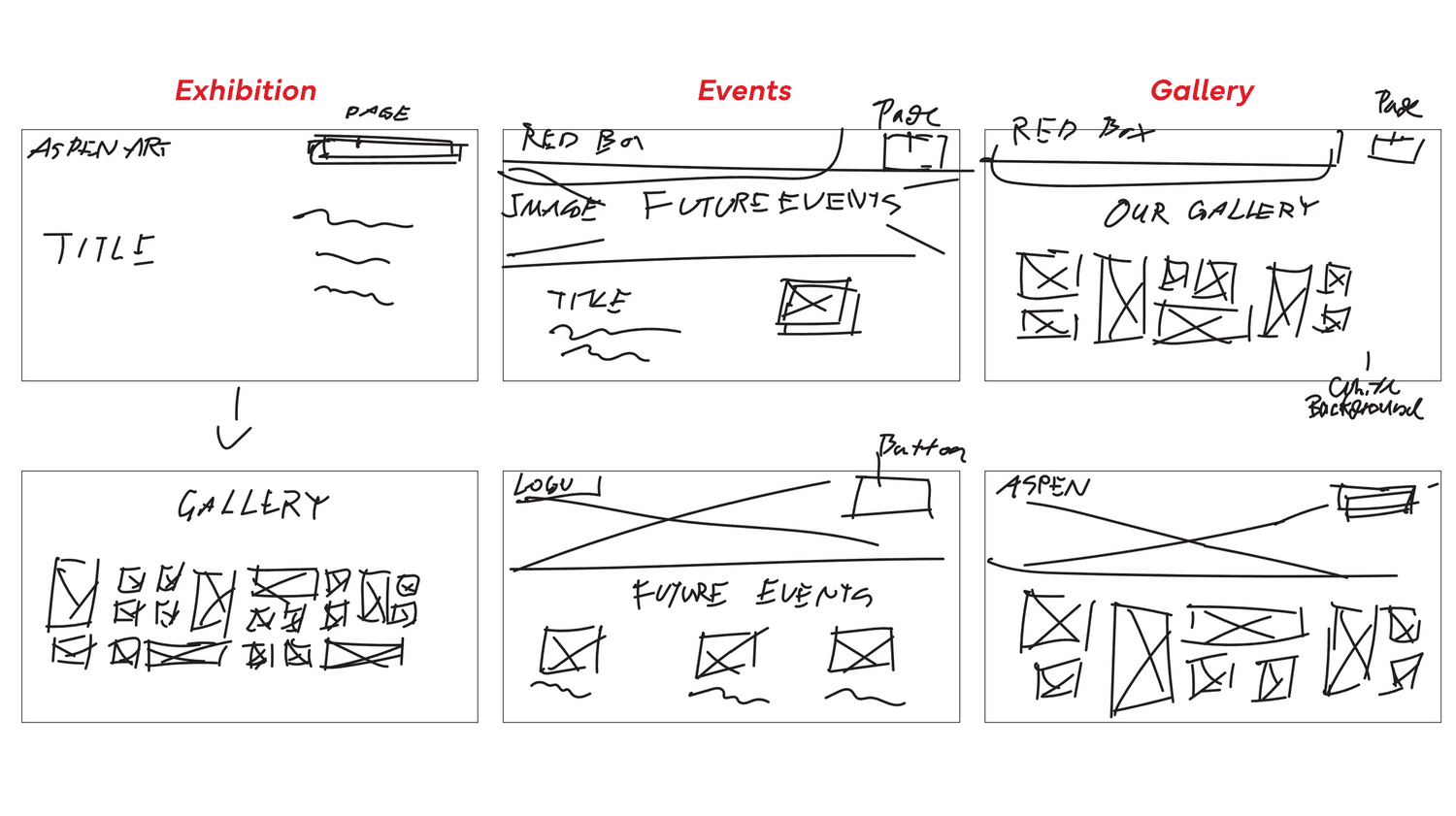
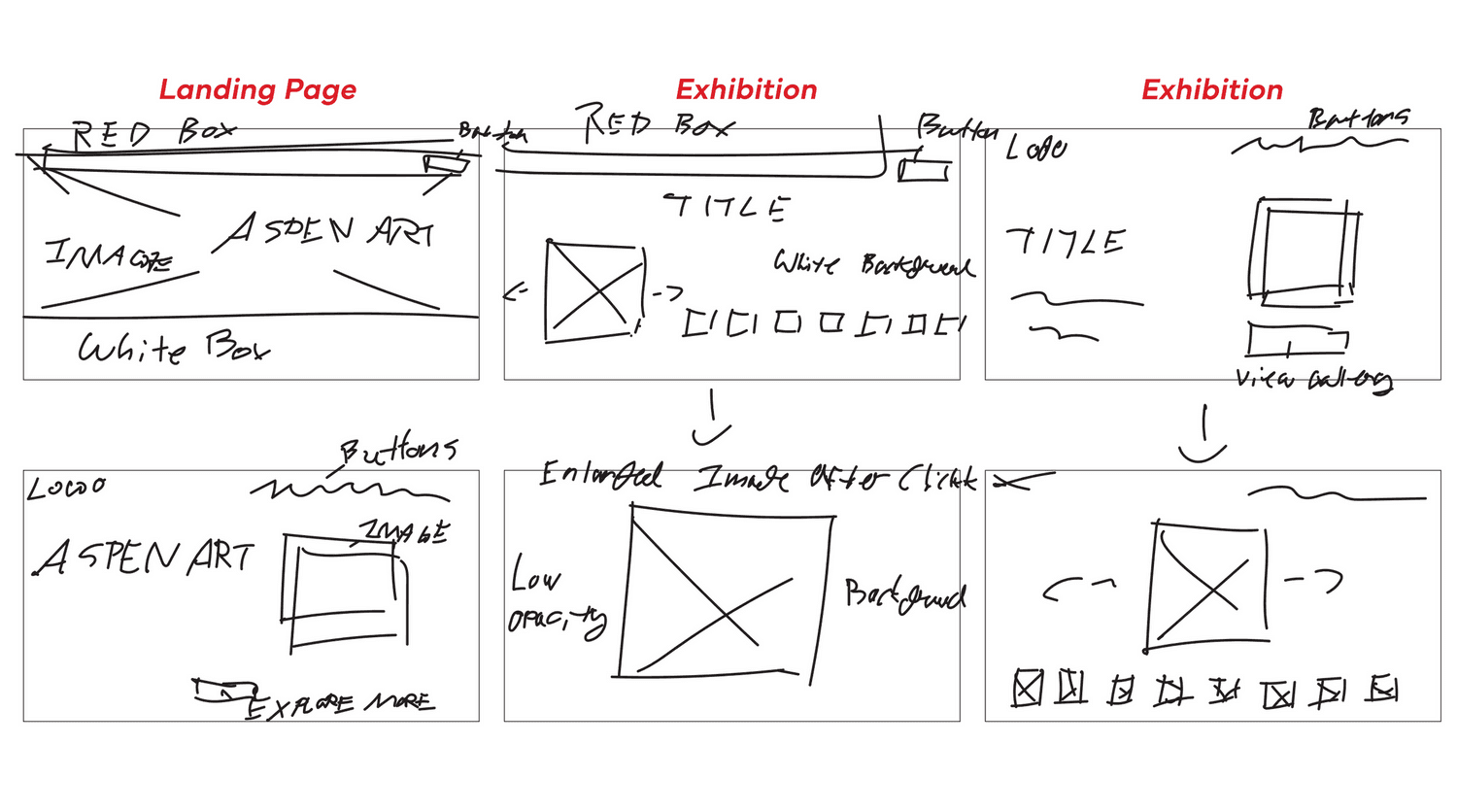
Aspen Art Museum is an artist-founded institution dedicated to supporting artists in the development of bold ideas to shape their museum and the field of art today. The overall goal of this project was to create and refresh with a more visually appealing and user-friendly landing page with responsive design that represented the museum accurately. Wireframing was created from user-research which influenced the design process of the web design. Final deliverables included a responsive landing page coded through CSS and HTML5. Prototypes were created and tested through Figma mock-ups.
Problem:
Creating content for a real-world exhibition or performance event. Design solution must be unique from the original. All text-based content will be repurposed from the existing event. Text and high-resolution photographic content will be from internet sources. Only existing images and logos from the institution may be used.
Context:
Target Users: All age demographics. Those who visit museums often. People who value art, crafts, and live shows. Music is a priority in their life. People who are open to different forms of art and culture.
User Needs: To be more visually appealing in the world of contemporary art. More user-friendly exhibition page with responsive design. Intuitive visual solutions to represent a modern outlook on technology, form, and language.
User Goals: Final presentation must exhibit a convincing, creative, logical manner that sells the overall design solution.
Constraints: No clear goals. Visual solutions only appealing to a certain audience. Keeping a modern look with still representing art culture. Small demographic with location area.
Role: UX/UI Designer — responsible for research, typography, and visual design.

Process:
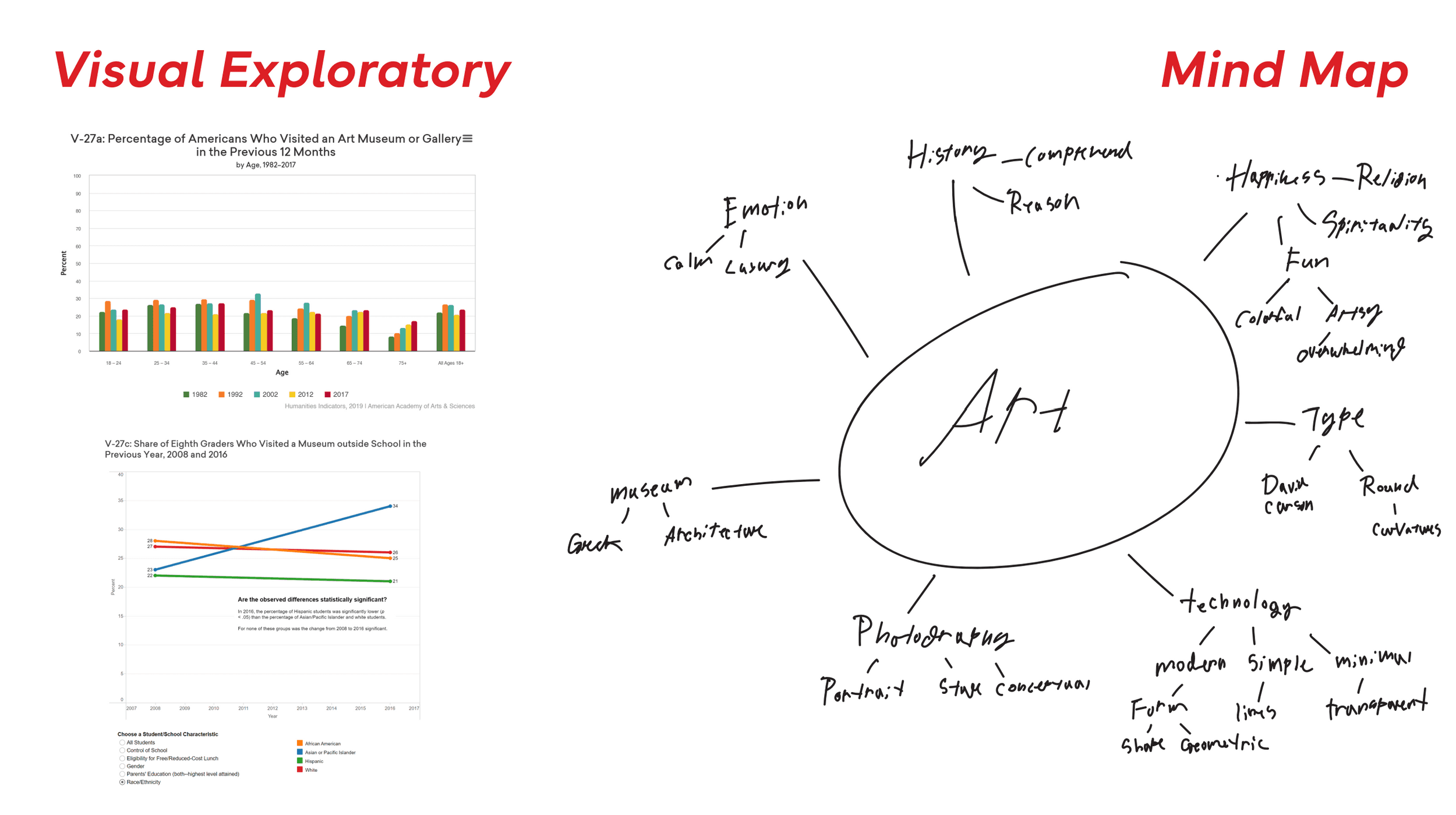
Research: Categorized the research into two main groups; Simplicity and Engagement. Research findings explained how the over-abundance of information can lead to feelings of overwhelm which deters interest and that the main issue at hand is to seek and grab the interest impactfully, through digital and print support and a user-friendly exhibition page with responsive design.
Competitive Analysis: Art museum attendance has declined 17% with ages 18-40 since 1982. Ages 65+ have risen substantially. 38% of Catholic school students visit an art museum on their own. The rates have flatten out since 2002.
Visual Design: Developed a fully responsive landing page that is illustrated by typography to bring engagement within the interactive design.
Proposal:
Bringing new brand guidelines to represent Aspen Art Museum in a way that shapes their bold ideas and their creativity to a whole. With many brands continue to refresh their design language to clarify its identity, it is a It is a common visual trait that helps revitalize any current image to evolve, attract new growth, and expand on their loyalty. Along with intuitive visual solutions to represent a modern approach on technology through form and language, being able to emphasize on simplicity and minimalism with color, typography, and geometric forms helps establish hierarchy and cohesion throughout the project.


Summary:
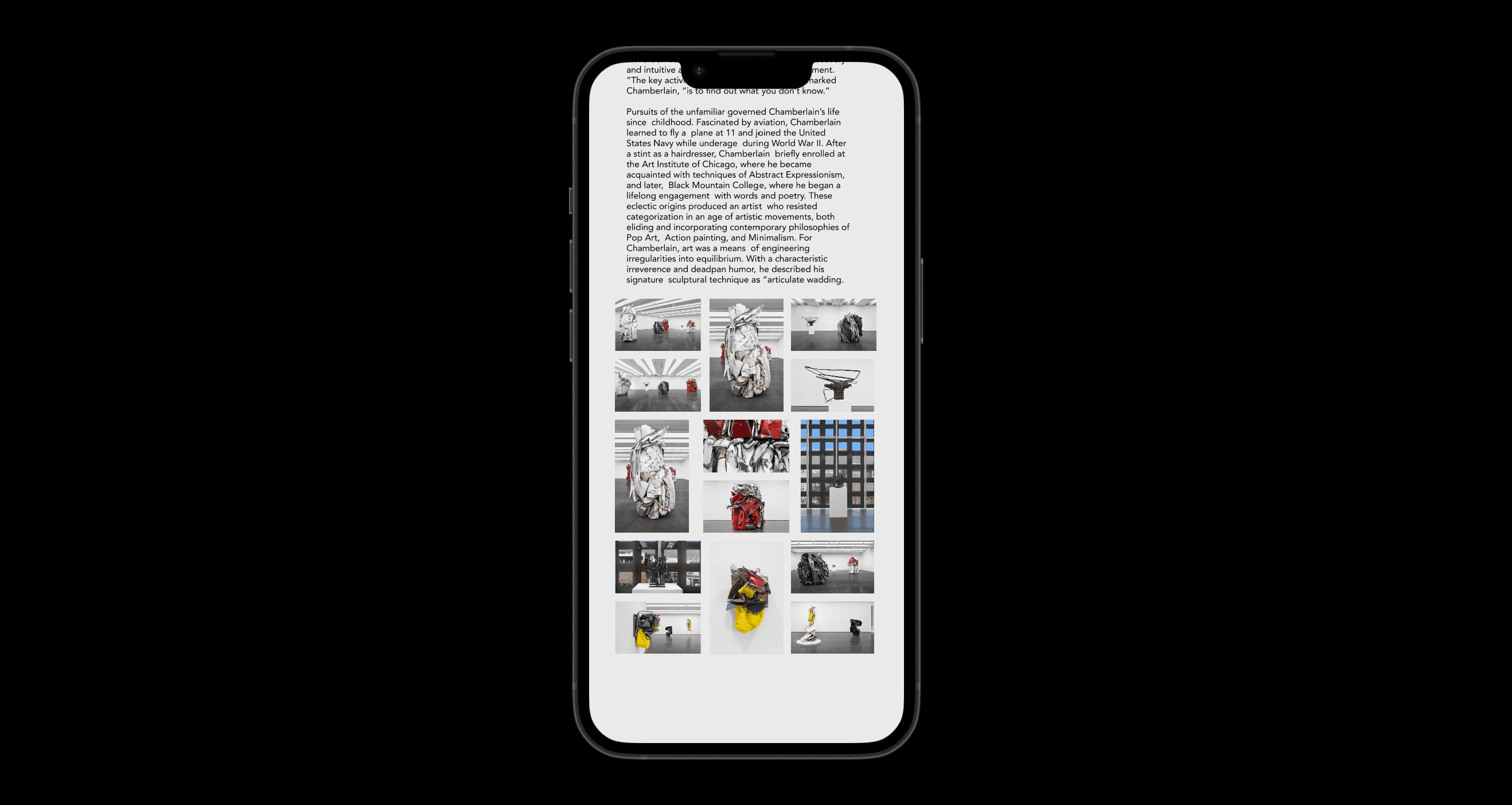
Museum visitors often encounter unengaging digital and print materials when trying to connect with real-world art exhibitions, leading to a disconnect between physical art spaces and modern audience expectations. To address this proble,, a unique communication strategy and visual identity was developed for the Aspen Art Museum to repurpose existing event content into a reimagined exhibition showcase. All text-based components and existing logos were repurposed from the institution's official exhibition data, while high-resolution photography was integrated directly from sourced materials to document artist John Chamberlain's THE TIGHTER THEY'RE WOUND, THE HARDER THEY UNRAVEL. By emphasizing color and simplicity with geometric forms, the system establishes a clear visual hierarchy where typography serves as the dominant visual layout component. The design ecosystem balances solutions to appeal to regular museum-goers while simultaneously attracting new individuals through a comprehensive suite of deliverables generated in Adobe Illustrator and Figma. These outputs feature a cohesive typography poster, a responsive exhibition webpage layout, realistic product mockups, and an interactive web and mobile prototype. Ultimately, this comprehensive design solution replaces static layouts with an intuitive, modern outlook on technology, form, and language, balancing professional branding principles with an accessible presentation that expands a museum's cultural reach across all age demographics.
Other projects

REVI (CAM Thesis Project)
REVI: Redefining The UX in Automotive Infotainment Systems
ParkPulse Mobile App
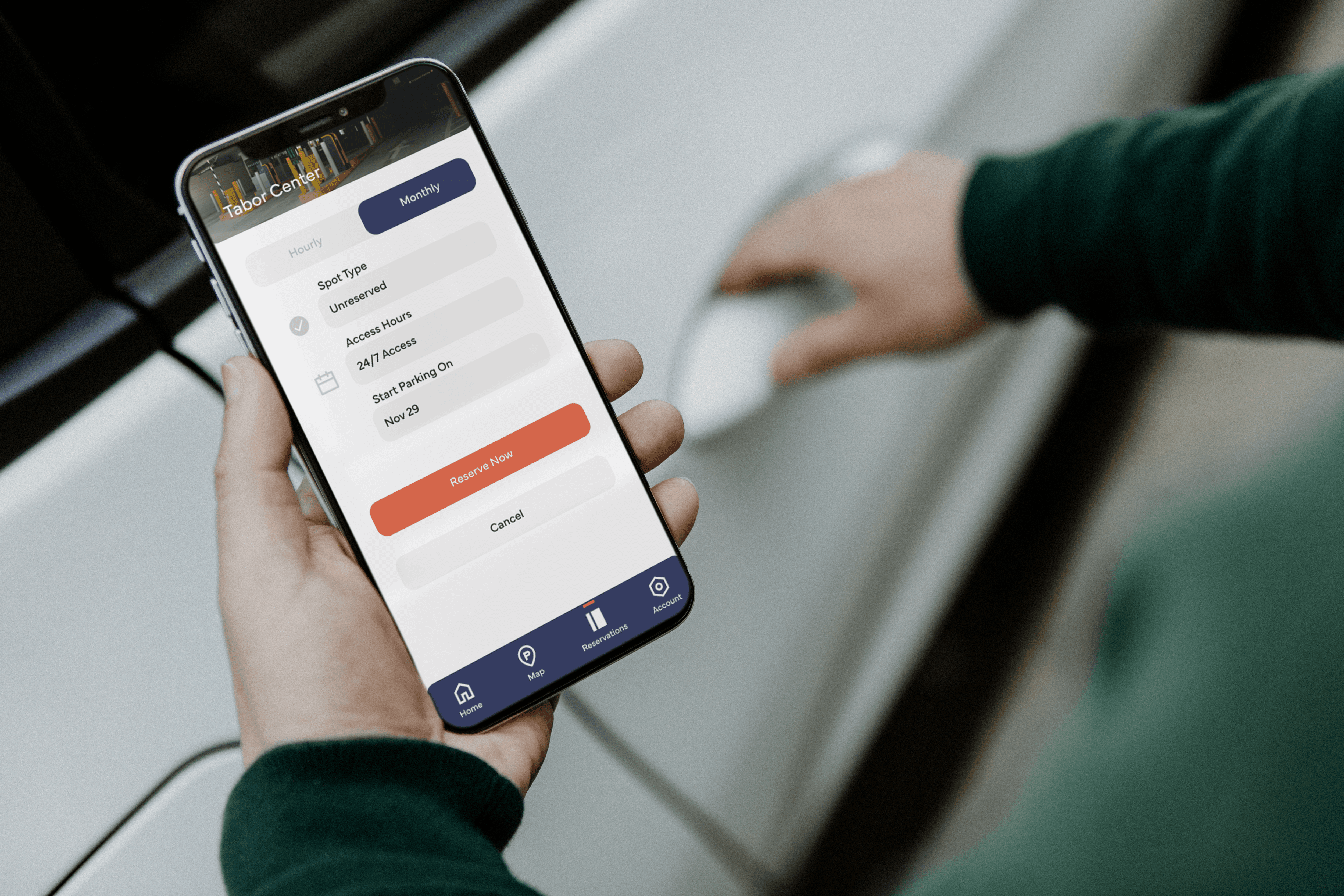
ParkPulse: Your mobile parking companion with live data and hot spots personalized to your commute.
EKARA (Nissan Reimagined) Brand Guidelines
Iconic Meets Innovation: The future blend of EV and enthusiasts